

“By pursuing his own interest he frequently promotes that of the society more effectually…”
Adam Smith
It is said that the top 10 positions in any industry in any good economy are a fiercely contested place, else if the participants are maintaining the same position for a long time, it would mean that the game is rigged.
Competition law which is often called antitrust law exists to prevent market dominance from stifling competition. It ensures fair markets by prohibiting monopolistic practices, anti-competitive agreements, and abuse of dominance.
In recent times there had been controversies around the abuse of dominant position by Google, Microsoft and Apple by some application makers and various advocacy groups interested in privacy etc. There is a growing interest in the subject therefore this article would give a short introduction to the machinations of competition law from an Indian perspective for the purpose of understanding only.
Origins of Competition Law and Its Development in the U.S.
The origins of anti-trust law is traced to common law in England where as things would turn over time, monopolies were granted by the crown in the form of the latter’s patent and were a creature of law, to contract of restrain which eventually formed the basis of modern day anti-trust law. Prof. Willian Letwin has written exhaustively about it. Although it cannot be ruled out that the influence of classical economists like Adam Smith also have a role to play.
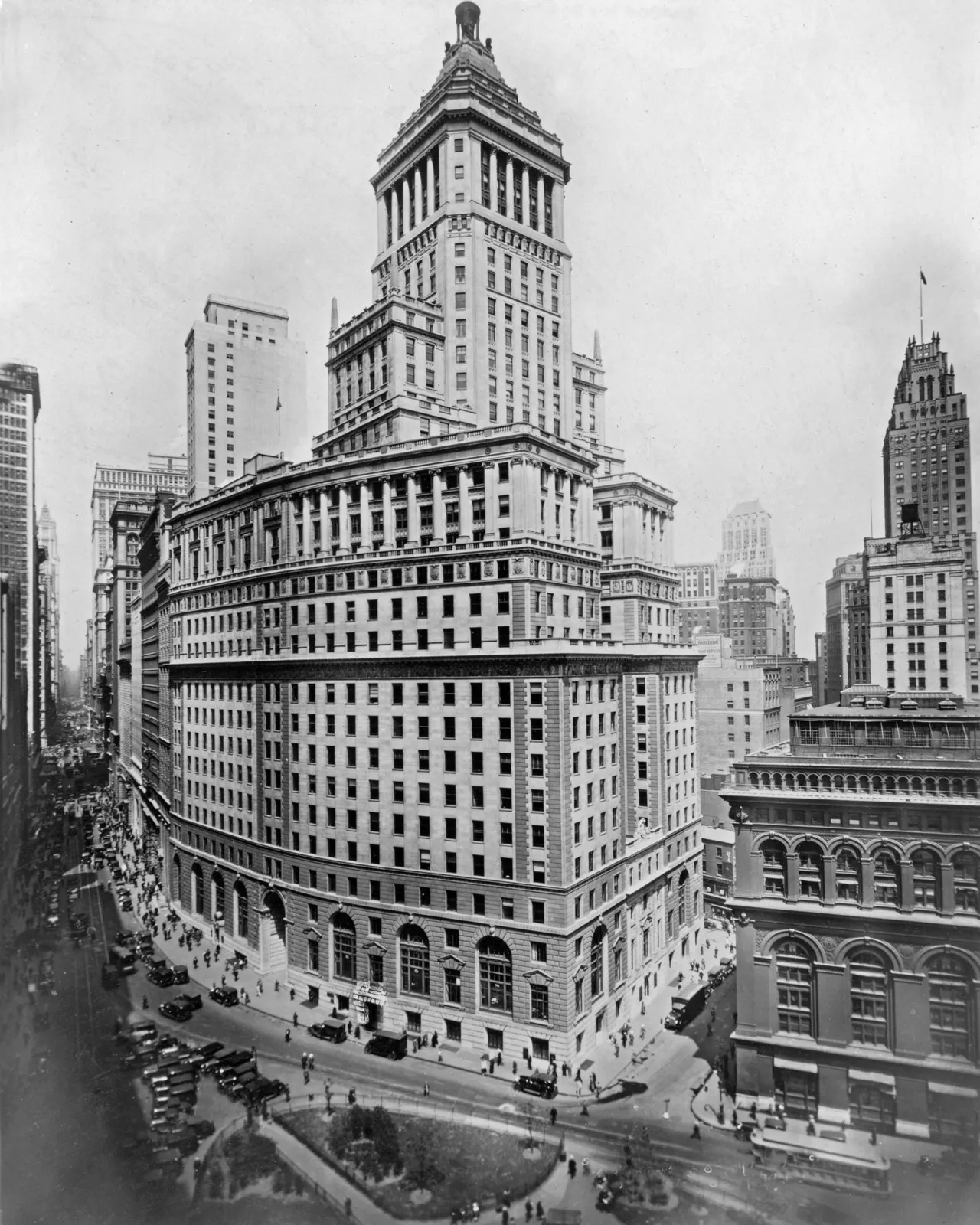
It all started with an American company and corporate trust that from 1870 to 1911 was the industrial empire of John D. Rockefeller of the famed Rockefeller family, controlling almost all oil production, processing, marketing, and transportation in the United States. By 1880, Rockefeller’s Standard Oil Company incorporated in Ohio in 1870 had through elimination of competitors, mergers with other firms, and use of favourable railroad rebates, it controlled the refining of 90 to 95 percent of all oil produced in the United States.
In 1882, the Standard Oil Company and its 40 affiliates formed a trust called the Standard Oil Trust by signing an agreement which had nine trustees, including Rockefeller. In the late 19th century, American businesses would use the legal vehicle of trusts, which means property of one held for the benefit of others, to hold large businesses. Therefore John Sherman, a lawyer turned senator, brought in an anti-trust law called the Sherman Anti-Trust Act. John Sherman was the younger brother of Gen. Sherman of the American Civil War, after whom the famous WWII US battle tanks were named.
It would only be an historical coincidence that John Sherman was appointed as Secretary of State in 1897 for President William McKinley who is again quite in news these days! Ironically, One of the Sherman Act’s main provisions outlaws all combinations that restrain trade between states or with foreign nations. This prohibition applies not only to formal cartels but also to any agreement to fix prices, limit industrial output, share markets, or exclude competition. A second key provision makes illegal all attempts to monopolize any part of trade or commerce in the United States. In 1892 the Ohio Supreme Court ordered the trust dissolved, but it effectively continued to operate from headquarters in New York City.
In 1906 the U.S. government brought suit against Standard Oil Company (New Jersey) under the Sherman Antitrust Act of 1890; in 1911 the New Jersey company was ordered to divest itself of its major holdings—33 companies in all. The present day Mobil Oil, Chevron Corp., Exxon Corp. British Petroleum and some others are all offshoots of this dissolution.
In 1914 Congress passed two legislative measures that provided support for the Sherman Act. One of these was the Clayton Antitrust Act, which elaborated on the general provisions of the Sherman Act and specified many illegal practices that either contributed to or resulted from monopolization. The other measure created the Federal Trade Commission, providing the government with an agency that had the power to investigate possible violations of antitrust legislation and issue orders forbidding unfair competition practices.
Competition Law in India – From the MRTP Act to the Competition Act
After India achieved independence, a formal model of planning was adopted, and accordingly the Planning Commission, the predecessor of present day Niti Ayog, reporting directly to the Prime Minister of India, was established on 15 March 1950, with Prime Minister Jawaharlal Nehru as the chairman. Authority for creation of the Planning Commission was not derived from the Constitution of India or statute; it is an arm of the Central Government of India. The first Five-Year Plan was launched in 1951, focusing mainly on development of the agricultural sector.
One brilliant scientist by the name of Prasanta Chandra Mahalanobis was a member of the Planning Commission. He is credited for the statistical measure called the Mahalanobis Distance and as the founder of Indian Statistical Institute. Mahalanobis’s influence on India’s Planning Commission was significant, particularly in shaping the Second Five-Year Plan (1956-1961), which implemented the Mahalanobis model. This model, proposed by Mahalanobis, focused on rapid industrialization and prioritized investments in heavy industries like steel, power, and machine tools to reduce India’s dependence on foreign imports.
However, despite the model promoting rapid industrialization the Mahalanobis model came under heavy criticism for neglecting other sectors like agriculture and consumer goods. The government further noticed that the wealth generated by the second five year plan was concentrated only in a few hands. Therefore another committee was formed under PC Mahalanobis to inquire into the ‘distribution of income and levels of living’. There was a growing discontent for large business houses who controlled most wealth and it was an ask of the people to have something on the lines of British Monopolies Commission to check the state of monopolies in India.
The Government of India appointed the Monopolies Inquiry Commission (MIC) in April 1964, chaired by Justice K.C. Das Gupta, to investigate the extent and effects of monopolistic and restrictive trade practices in key sectors of the Indian economy. On the recommendations of the Commission the Monopolies and Restrictive Trade Practices (MRTP) Act, enacted in 1969, aimed to prevent the concentration of economic power and control monopolies.
The MRTP Act primarily focused on preventing monopolies but was criticized for being more regulatory than prohibitive. It lacked the teeth to address modern anti-competitive behavior such as cartels and abuse of dominance.
To address these shortcomings, the Competition Act, 2002 was enacted, replacing the MRTP Act and introducing a more dynamic, enforcement-based framework. This law, enforced by the Competition Commission of India (CCI), plays a key role in regulating anti-competitive practices.
The present day competition law viz, the Competition Act, 2022 is structured around three major provisions:
A. Section 3 – Anti-Competitive Agreements
Prohibits agreements that have an appreciable adverse effect on competition (AAEC), including:
· Cartels (price-fixing, bid-rigging, market allocation)
· Exclusive supply & distribution agreements
· Resale price maintenance
Example: Fast-Delivery Companies Investigation (2025) – The CCI initiated an investigation into major quick commerce platforms such as Zomato, Swiggy, and Zepto for alleged deep discounting and predatory pricing, which could harm smaller retailers.
B. Section 4 – Abuse of Dominant Position
Prevents dominant companies from exploiting their power through:
· Predatory pricing (selling below cost to eliminate competition)
· Refusal to deal (blocking access to essential facilities)
· Imposing unfair conditions on consumers or businesses
Example: Google’s Android Ecosystem Case (2022) – The CCI imposed a penalty of ₹1,337.76 crore on Google for abusing its dominant position by imposing unfair conditions on device manufacturers.
C. Section 5 – Regulation of Combinations (Mergers & Acquisitions)
Regulates mergers, acquisitions, and takeovers that may reduce competition or create monopolies.
Example: Introduction of Deal Value Threshold (2024) – The Competition (Amendment) Act, 2023, introduced a new deal value threshold requiring transactions exceeding INR 20 billion to seek CCI approval, ensuring fair competition.
The Role of the Competition Commission of India (CCI)
The CCI is the regulatory body responsible for enforcing competition law in India. Its primary functions include:
- Investigating Anti-Competitive Practices – The CCI can initiate inquiries into businesses suspected of violating Sections 3, 4, or 5.
- Imposing Penalties – It has the authority to fine companies found guilty of anti-competitive behaviour.
- Approving or Blocking Mergers – Ensures that large corporate deals do not harm competition.
The Google case, quick commerce probe, and merger regulations all highlight the CCI’s proactive role in maintaining fair competition in India. Strong enforcement benefits all businesses, particularly small and mid-sized enterprises, by ensuring they have a fair chance to grow and compete.
Conclusion
Monopolies have come a long way in the last few centuries from being a creature of law to being opposed by law. This is largely through the judge made law in common law of England and later solidified through thoughts of classical thinkers in economics like Adam Smith. There are still some monopolies like the patents which are legal, yet by a large competition is seen as something inalienable to human progress.
For the small businesses it helps them to have a breathing space and compete with larger players by not getting locked in. For the larger businesses it is important to know as they are more often the target of anti-trust litigation. For most part, it is for the good of consumers and innovation.
1. Law and Economic Policy in America: The Evolution of the Sherman Antitrust Act
By William Letwin
2. Chandra, N. K. “Monopoly Legislation and Policy in India.” Economic and Political Weekly, vol. 12, no. 33/34, 1977, pp. 1405–18. JSTOR, http://www.jstor.org/stable/4365854. Accessed 9 Apr. 2025.
3. Kulshreshtha, V. D. “REPORT OF THE MONOPOLIES INQUIRY COMMISSION: AN EVALUATION.” Journal of the Indian Law Institute, vol. 8, no. 3, 1966, pp. 413–27. JSTOR, http://www.jstor.org/stable/43949911. Accessed 9 Apr. 2025.
4. https://www.britannica.com/event/Sherman-Antitrust-Act
5. https://www.britannica.com/money/Standard-Oil
6. https://indianculture.gov.in/reports-proceedings/report-monopolies-inquiry-commission-1965-vol-i-and-ii Report of the Monopolis Enquiry Commission. 1965 Vol I and II